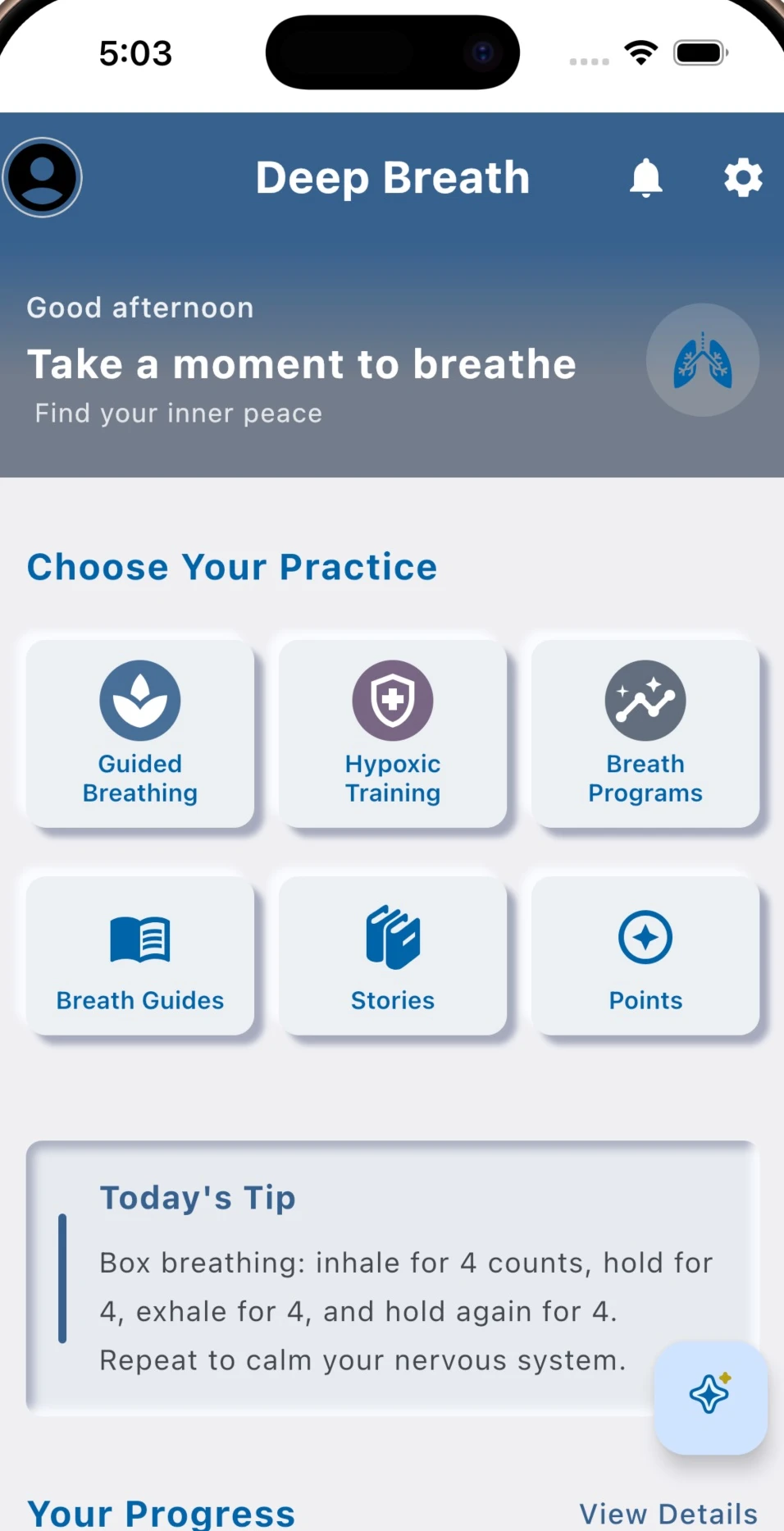
Intermittent hypoxic and hyperoxic breathing
Our foundational method derives from validated IHHT protocols, widely used in space medicine, elite sports and metabolic rehabilitation. These breathing sequences change oxygen exposure levels to promote adaptation at the cellular level, with the aim of improving mitochondrial efficiency, stimulating regenerative processes and enhancing oxygen economy in tissues.
Hypoxic sessions are delivered in the app with their own guidance. Read the safety guide before intensive practice.
Adaptive training engine
Deep Breath uses performance-based feedback to adjust session intensity, duration and breath-hold intervals. This calibration keeps you challenged at an appropriate level while minimising the risk of overexertion or stagnation. It suits beginners and advanced users, including people training for high-altitude environments or for cognitive resilience under pressure.
Structured guided breathing
Every protocol is structured on evidence-based respiratory interventions designed to stimulate parasympathetic activation, reduce cortisol release and improve cardiovascular and neurological coherence. Sessions range from short routines for stress de-escalation to longer sessions for performance priming or recovery.
See breathing in motion
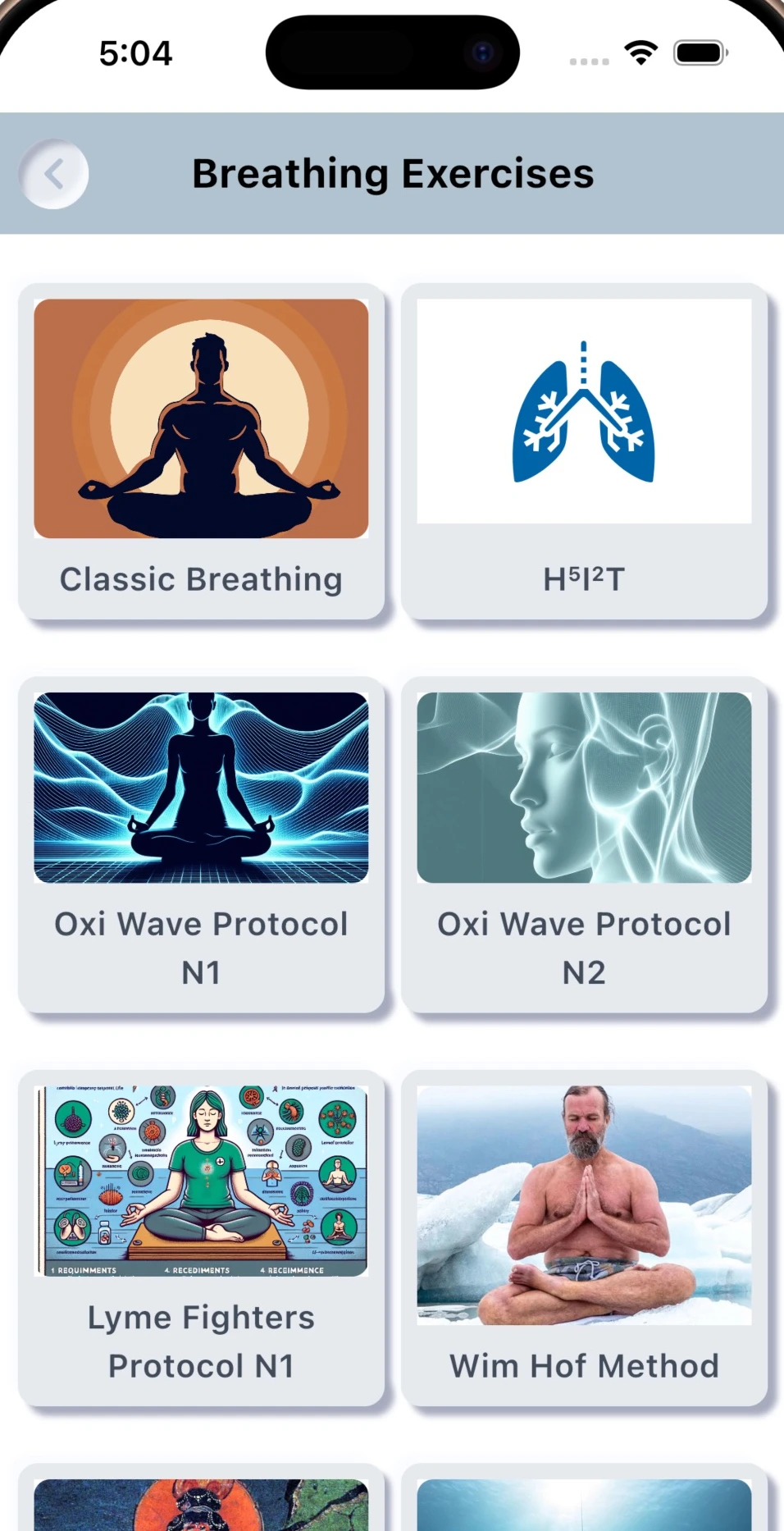
Comprehensive breath guides
A complete library of expert-led exercises and techniques. Whether you are a beginner or an advanced practitioner, the guides give clear instructions and practical tips for performance, focus and wellbeing.
Browse the fifteen guides
Performance metrics and biofeedback In development
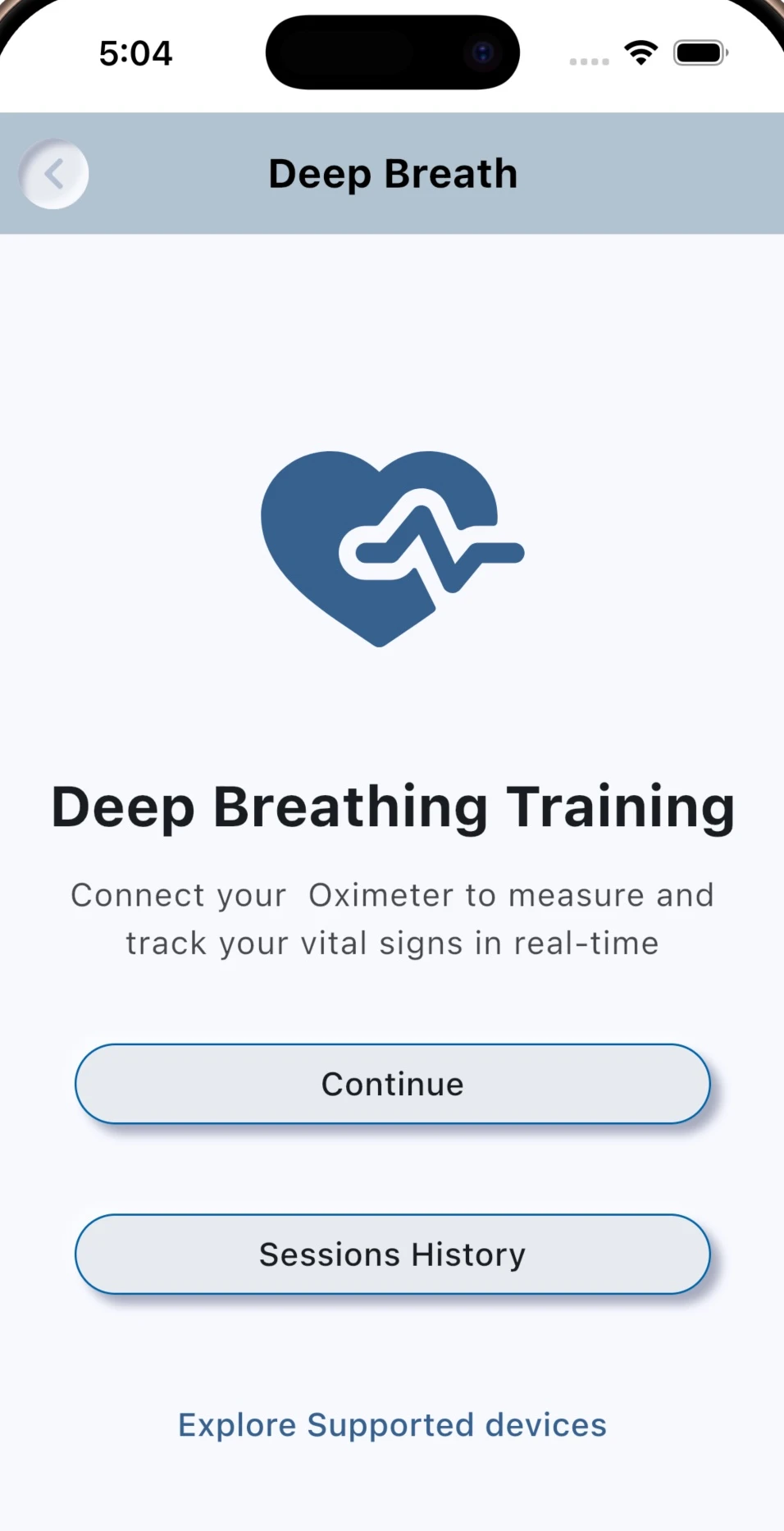
We are developing tools to visualise session outcomes through physiological metrics, including respiratory rate variability, oxygen saturation estimates and Hypoxic Training Index (HTI) scoring. These analytics will let users relate how they feel to measurable physiological change.
Oxygen saturation comes from a connected external oximeter. Other entries are information you add yourself.
Expert-verified scientific framework
All training protocols are developed in collaboration with clinicians, neurobiologists and geroscientists. The platform reflects practice from high-performance physiology, neurocognitive research and integrative medicine.
Read the science
 Deep Breath
Download